The Science Behind Massage and Stress Relief
You know that sensation where your shoulders slowly migrate toward your ears after a long day at the keyboard? We usually brush this off as everyday tension, but researchers classify this as a primal "threat response." The science behind massage and stress relief reveals that feeling overwhelmed isn't just a bad mood — it's a tangible physiological reaction to your environment, with well-documented massage benefits for stress.
Think of your nervous system like a car engine: daily anxiety constantly jams the gas pedal. Targeted stress management massage acts as the body's braking system. Neurological studies show that physical pressure signals your brain to shift into a healing "rest-and-digest mode." Regular massage and stress reduction aren't spa luxuries — they're a biological necessity.
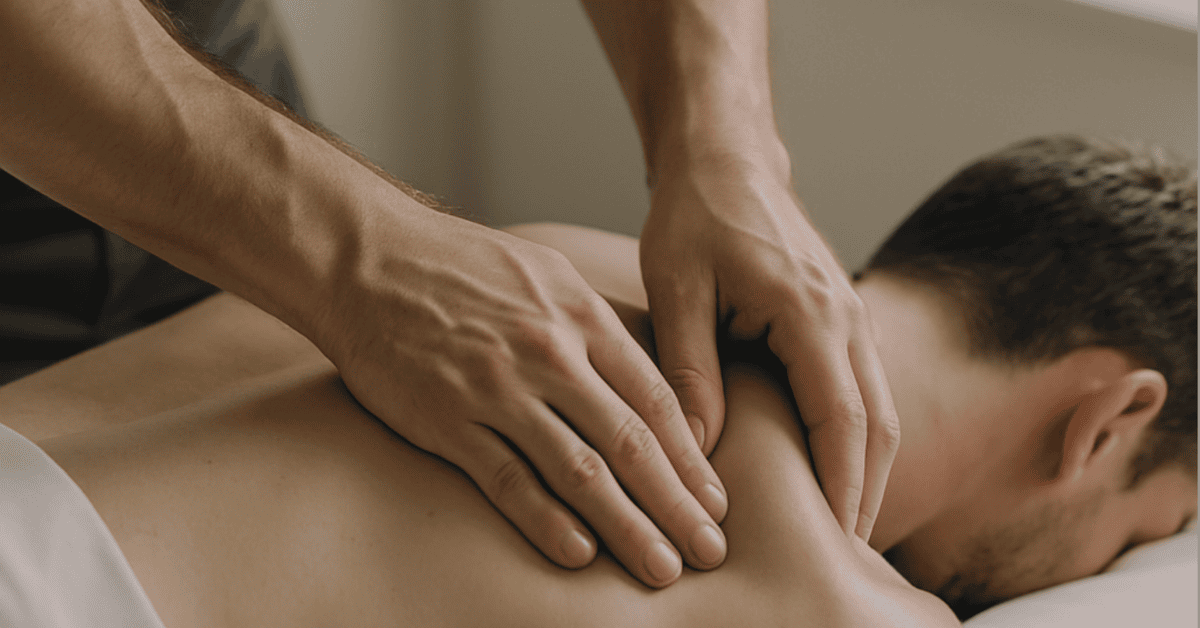
Stepping on the Brakes: How Massage Activates Your Parasympathetic Nervous System
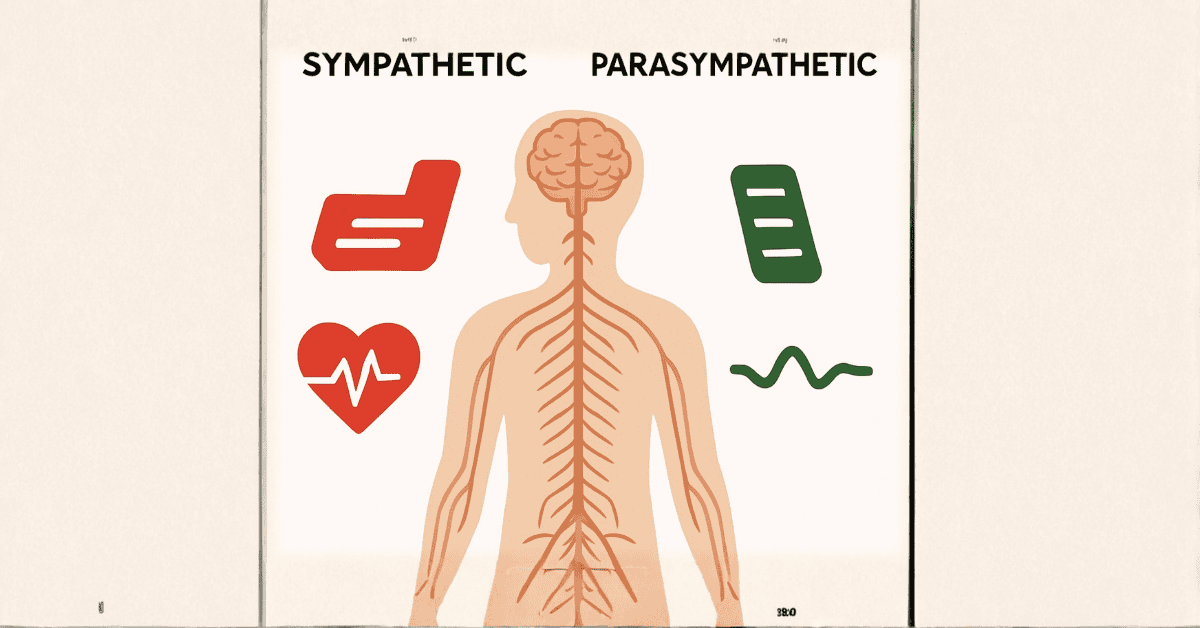
Mental tension is your brain pressing your body's "gas pedal," or the sympathetic nervous system, driving that survival-focused fight-or-flight mode. Useful when you're dodging danger. Exhausting when it never shuts off.
Massage manually shifts these internal gears. Think of your nervous system as a two-part mechanism:
Sympathetic (The Gas): Elevates your heart rate and tightens muscles to prepare for action.
Parasympathetic (The Brakes): Lowers blood pressure and signals your cells that it's safe to rest and digest.
The secret to parasympathetic activation is the vagus nerve — a major information highway running from your brain down into your abdomen. When I apply steady, rhythmic pressure during a focused stress massage, that vagus nerve stimulation sends a biological signal to your brain that the immediate threat has passed.
Once that safety signal lands, you might notice a deep, involuntary sigh escape your lips. That's not random. The physiological effects of tactile stimulation go far beyond loosening physical knots — they fundamentally alter your internal chemistry. By stepping on the neurological brakes, your body is finally primed to reset the hormone thermostat.
The Hormone Thermostat: Turning Down Cortisol and Boosting Your Feel-Good Chemicals
When you're constantly stressed, your internal thermostat is cranked high, flooding your system with cortisol. This primary stress hormone keeps you wired, disrupts your sleep, and frays your nerves over time. The connection between cortisol levels and massage therapy is real — sustained physical pressure prompts your brain to dial that heat back down to a healthy baseline. If you've ever wondered "does massage help anxiety," research suggests these hormonal shifts can reduce arousal and ease tension, and they're a big part of why massage therapy for stress relief works as well as it does.
But lowering cortisol is only half the equation. As those stress chemicals recede, your brain begins releasing the neurotransmitters responsible for that floaty post-session feeling. The research on manual therapy's impact on serotonin and dopamine is compelling — essentially swapping the chemistry of a chaotic workday for a cocktail of calm focus and deep contentment. This shift helps explain why many people use massage for anxiety and sleep as part of an evening wind-down, and why massage therapy for anxiety can be such a meaningful complement to other care when a racing mind just won't quit.
Ever wonder why you feel so safe and settled on the table? That's oxytocin. This powerful hormone wraps your nervous system in a biological blanket of security during therapeutic touch. Once your internal chemistry settles into that rhythm, your physical tissues finally get the green light to let go — which brings us to the stuff I see every single day in my practice.
Stretching the Rubber Band: Releasing Chronic Muscle Tension and Tech Neck
Constantly hunching over a laptop creates what's commonly called "tech neck," causing myofascial tension — a state where the connective tissue wrapping your muscles becomes rigidly bound. I wrote more about this in my post on beating tech neck with myofascial release, but the short version is this: think of your muscle fibers like tiny rubber bands. When overworked, they get stuck in a contracted state instead of snapping back. Reducing that chronic tension without outside help is genuinely difficult.
Applying targeted pressure to these locked areas triggers mechanotransduction — a biological process where your cells convert physical touch into healing chemical signals. This cellular conversation physically flushes out trapped metabolic waste, which is exactly why using massage to relieve stress is so effective, and why massage to release stress can feel immediately cathartic. Without intervention, this stagnation tends to show up as three distinct problems:
Limited range of motion (more on that here)
Referred pain
Tension headaches
Beyond fixing physical stiffness, unlocking this tightly wound tissue creates systemic relief. Many of my clients are surprised to find that freeing physical tightness also unburdens their mental state. The body keeps score, as they say.
Matching the Technique to What Your Body Needs
Here's where I want to offer a slightly different take than the standard "pick your massage type" listicle.
Finding the best massage for stress and anxiety really comes down to what's actually going on in your body. Ultimately, the best massage for stress depends on how your body manifests tension — and these approaches can also support massage therapy for anxiety when mental agitation is driving the bus. When your mind is racing, lighter strokes interact with the more delicate nerve endings just beneath the skin. That gentle stimulation is genuinely effective at improving heart rate variability — your body's biological ability to bounce back from stress, and a key part of why Swedish massage for anxiety gets such consistent results. When mental strain has physically manifested as rigid, locked-up muscle tissue that's been building for months, that's when deeper, more targeted work is needed to create real change.
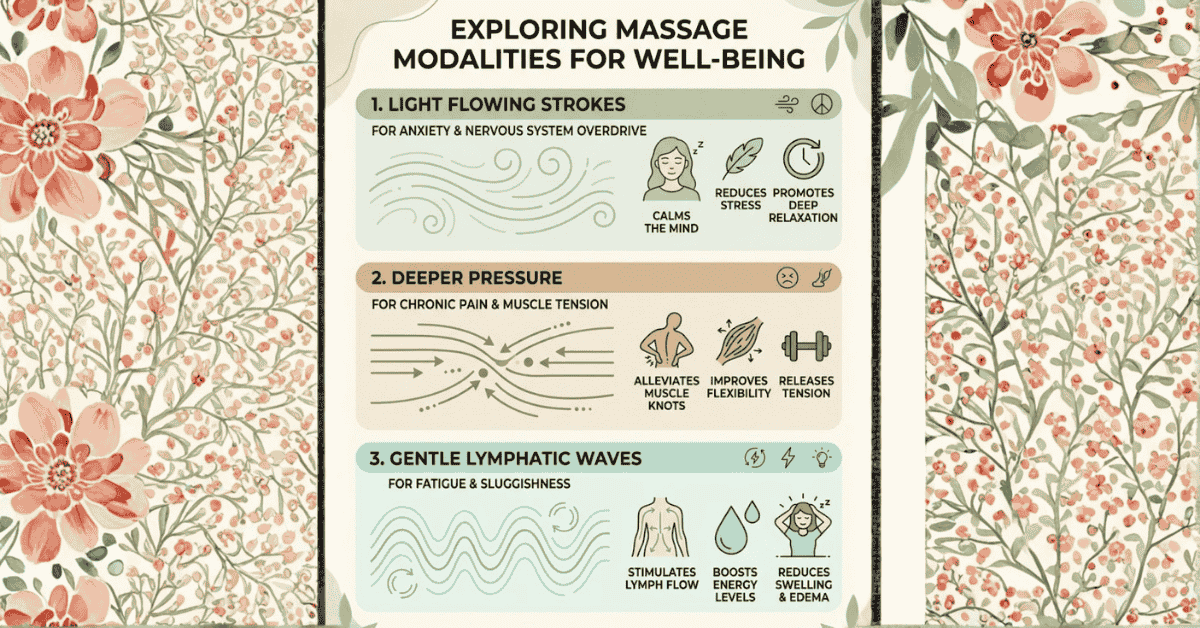
In practice, I find most clients need a blend. That's why I don't show up with a preset menu. After doing an intake on your first session, I build the approach around what your body is actually telling me that day. The framework looks something like this:
Lighter, flowing work: Best for nervous system overdrive, racing thoughts, and acute stress
Deeper, targeted work: Ideal for locked muscles, chronic postural pain, and long-standing tension patterns
Lymphatic, a light flushing massage: Perfect for feeling functionally sluggish, physically heavy, or run down
Some clients also benefit from a focused stress massage on the neck and shoulders during high-pressure weeks — sometimes that's all it takes to break the cycle. For persistent symptoms or diagnosed conditions, massage therapy for anxiety disorders should complement guidance from a licensed clinician, not replace it.
If you're curious about what a first session actually looks like, I cover that in detail here.
Beyond the Session: Building Long-Term Resilience
You don't have to view a massage appointment as a luxury or a one-off treat. If you've asked yourself "do massages help with stress" or "can a massage help with anxiety," the consistent answer from both research and my decade of client experience is yes — especially as part of a real massage therapy stress reduction plan.
By understanding how physical pressure lowers cortisol, you can start using massage therapy for stress management the way it was always meant to be used: as an ongoing practice, not just a reward for surviving a hard week. Regular sessions actively retrain your nervous system to return to a calm baseline faster. That effect compounds over time. Clients who come in consistently don't just feel better after each session — they're more resilient day to day.
A few practical tips to get the most out of it:
Schedule during lower-stress windows when your nervous system isn't already in overdrive
Hydrate well before and after to support your circulatory system
Give yourself at least 30 minutes post-session before jumping back into demands
Talk to your therapist about the best massage for anxiety based on your specific triggers — a good intake conversation makes a real difference
If you're in Los Angeles and ready to stop white-knuckling your way through the week, I'd love to help. Book a session here and we'll figure out exactly what your body needs.