Hyrox Training and Recovery: Why Your Body Needs More Than Just the Next Workout
If you've been spending any time in LA gyms lately, you've probably heard the word "Hyrox" thrown around. A lot. And if you haven't heard it yet, you will soon.
Hyrox is the fastest-growing fitness competition in the world right now, and it's spreading through the Los Angeles fitness community the same way Spartan Races did about a decade ago. I've got three clients who are active Hyrox athletes, plus one of my trainers is deep into it, so I've had a front-row seat to what training for this thing actually does to the human body. Spoiler: it's a lot.
Let me break it all down, and more importantly, talk about why recovery, specifically massage therapy, needs to be a core part of your Hyrox training plan, not an afterthought.
So What Even Is Hyrox?
For the uninitiated: Hyrox is an indoor fitness race that combines eight 1km runs with eight functional workout stations. You run a kilometer, then you hit a station, then you run another kilometer, then another station, eight times through. The stations include things like sled pushes, sled pulls, ski erg, rowing, burpee broad jumps, farmer carries, sandbag lunges, and wall balls.*
The whole thing covers roughly 8km of running plus all the functional work. It's a true hybrid test of endurance and strength, not just one or the other. That's what makes it different. And that's also what makes the recovery demands so significant.
<invoke name="PubMed:search_articles">Since its first event in Hamburg in 2018, Hyrox has exploded globally. In 2023 alone, over 175,000 people competed worldwide. The brand is actively targeting the 15 largest US cities by 2026, and races are already selling out across the country.**
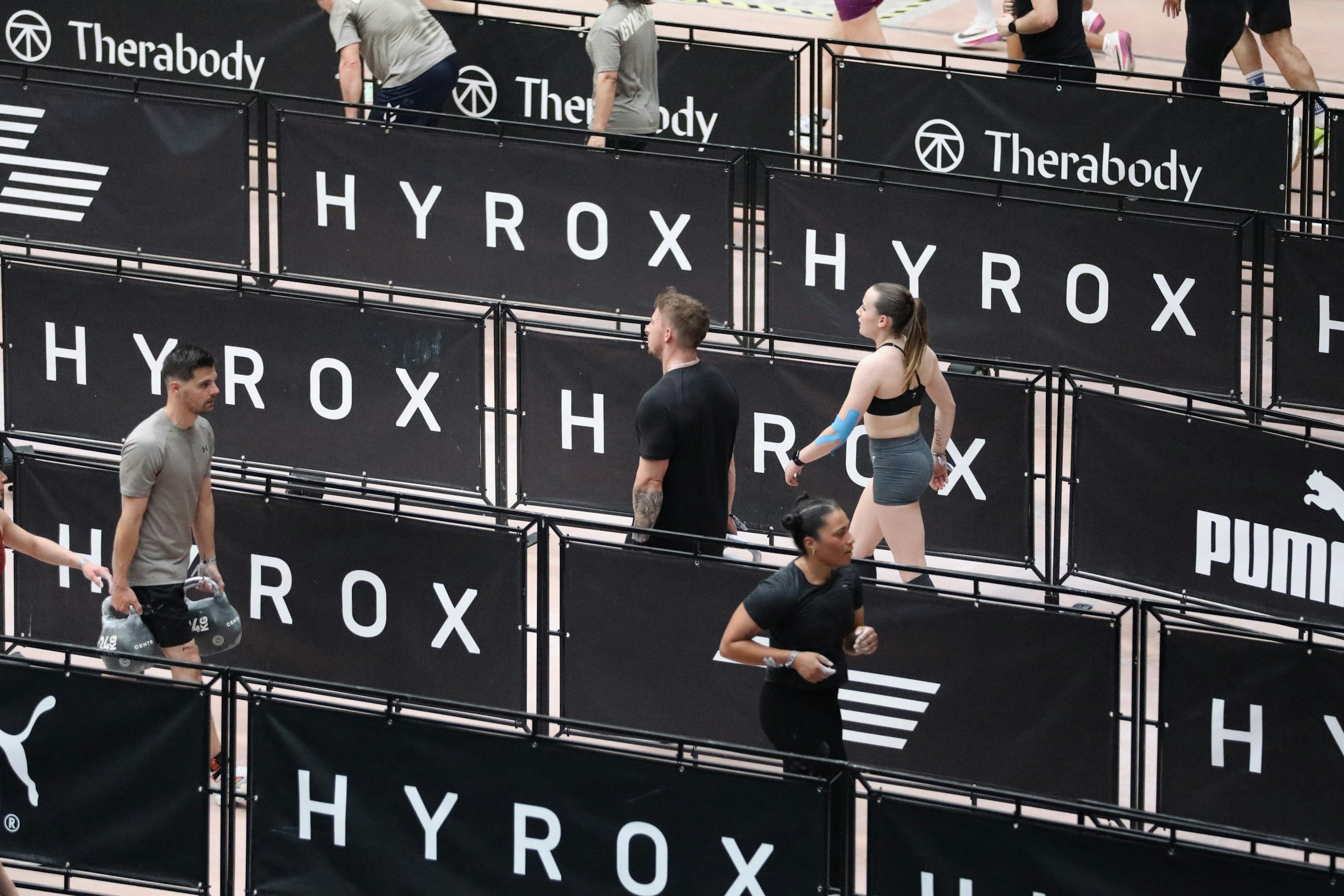
Why Hyrox Is So Hard on Your Body
I want to be honest with you about what I see on my table after these athletes train and compete. Hyrox isn't just cardio. It's not just strength training. It's both, stacked on top of each other, repeatedly, until you're depleted.
Here's where the body takes the most punishment:
Posterior chain. The sled push and pull absolutely smoke the glutes, hamstrings, and lower back. I see chronic tightness in these areas across all my Hyrox clients.
Hip flexors and quads. Eight rounds of running, combined with sandbag lunges, creates a compounding load on the anterior leg that builds up fast.
Shoulders and upper back. The ski erg and farmer carries create a kind of fatigue in the shoulder girdle that people don't expect. By the time they finish a race, their traps and rhomboids are fried.
Calves and feet. The repeated running load, especially when you're already fatigued from the stations, transfers a lot of stress down into the lower leg. I've seen plantar fascia issues pop up in Hyrox athletes who weren't giving their feet enough attention.
The nervous system. This one gets overlooked. Hyrox training is high intensity, often multiple times a week. The cumulative neurological demand is real, and massage is one of the best tools for parasympathetic recovery.***
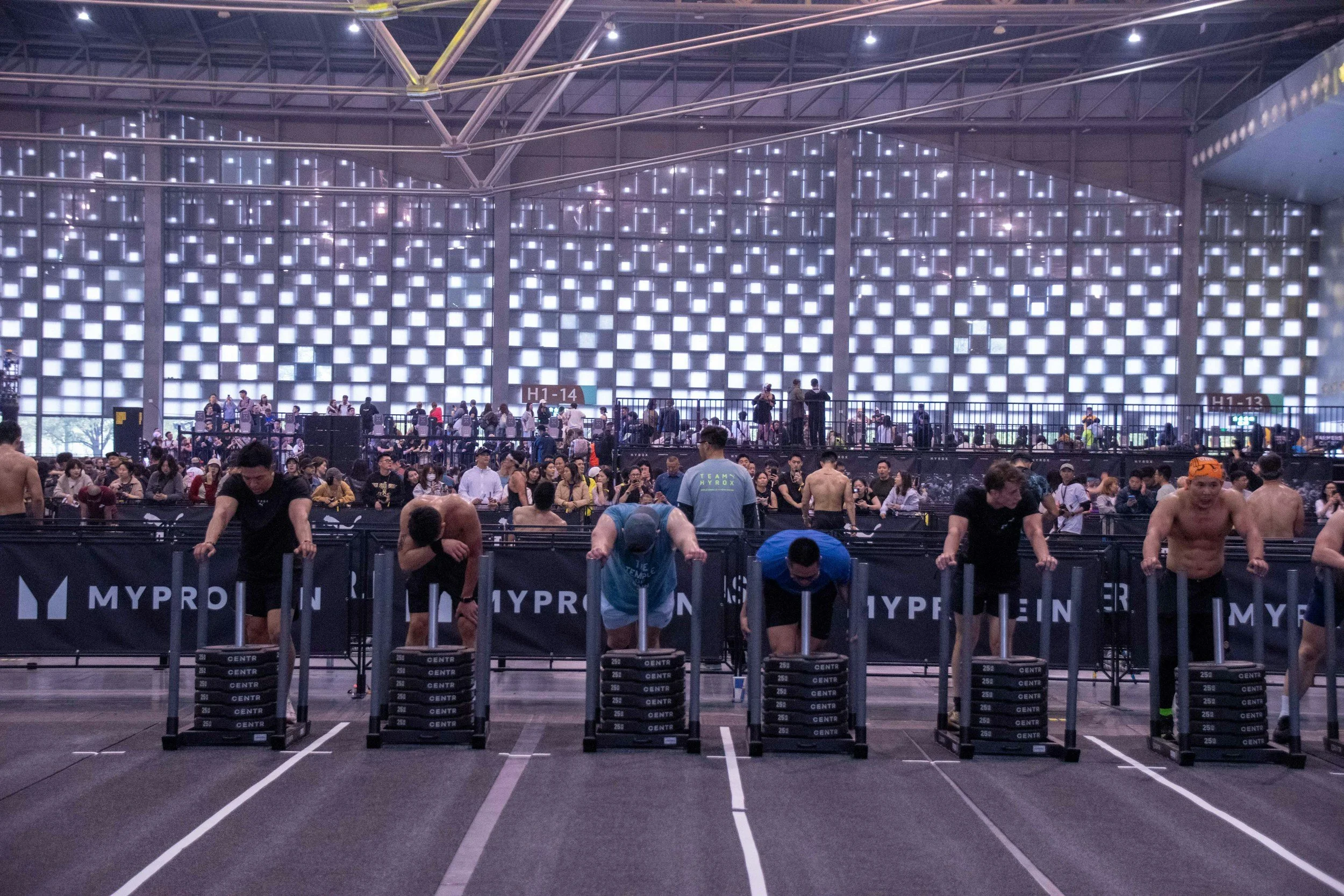
What the Research Says About Massage and Athletic Recovery
There's a reason professional sports teams have massage therapists on staff year-round. A 2023 systematic review in Sports (Basel) looked at 114 studies on massage and exercise performance and found consistent evidence that massage reduces delayed onset muscle soreness, lowers perceived fatigue, and supports psychological recovery including reduced anxiety and improved mood.* That last part matters more than people realize. Hyrox is as much a mental game as it is a physical one.
The same review noted that while massage may not directly increase measurable strength numbers the day of a race, it plays a significant indirect role in keeping athletes consistent, reducing injury risk, and helping them show up to training sessions fresh.* That's the value I see play out with my clients week after week.
How I Work with Hyrox Athletes
I don't have a set "Hyrox menu." That's not how I operate. Every session I do starts with an intake conversation, especially the first one, because I want to understand what your training week looks like, where you're in the training cycle, and what your body is actually telling us.
A runner who is two weeks out from a race has completely different needs than someone in their base-building phase eight weeks out. I work with that reality.
In practice, here's what I tend to focus on with Hyrox athletes:
Myofascial release on the hip flexors, quads, and IT bands, which take a beating from the running and lunging components
Deeper therapeutic work on the posterior chain, glutes, and hamstrings when tightness is limiting stride length or causing compensation patterns
Shoulder and thoracic work for athletes who are logging a lot of ski erg or farmer carry volume
Lower leg and foot work because nobody thinks about their feet until something hurts
I pull from deep tissue techniques, sports massage principles, myofascial release, and dynamic cupping depending on what the tissue is telling me. Every session is built around what your body actually needs, not a preset protocol.
When Should You Get a Massage During Hyrox Training?
Timing matters. Here's what I generally recommend:
During your training block: Once a week or every two weeks is ideal for most athletes training seriously. It keeps tissue quality high and catches problems before they become injuries. Check out my post on how often you should get a massage for more on this.
Before a race (4 to 7 days out): A lighter, maintenance-style session works well here. Not the time to go deep and stir things up. The goal is to flush tissue, improve circulation, and help the nervous system settle.
After a race: Give yourself 24 to 48 hours before coming in. Your body needs that initial acute recovery window. Then, a thorough session to address the soreness, restore range of motion, and start the process of getting you back to full training capacity.
The Mobile Massage Advantage for Hyrox Athletes
One thing I hear consistently from athletes is that they don't have time. Training takes hours. Race prep takes mental energy. The last thing a serious Hyrox competitor wants to do is fight Los Angeles traffic to get to a spa, then sit in a waiting room, then drive home when their legs are already toast.
That's exactly why mobile massage therapy makes so much sense for this population. I come to you. You don't have to go anywhere. You can rest on your own couch afterward. The whole experience is built around your recovery, not around the logistics of getting there and back.
I serve Beverly Hills, West Hollywood, Santa Monica, Studio City, Encino, Calabasas, Sherman Oaks, Woodland Hills, and throughout the greater Los Angeles area. If you're training for Hyrox and you're in The Valley or on the Westside, I can get to you.
A Note on Consistency
This is the thing I want every Hyrox athlete to understand. Recovery isn't a luxury. It's a training variable. The athletes who make real progress are the ones who treat recovery with the same seriousness they treat their sled push intervals.
I've watched my clients go from grinding through training with constant soreness and low energy to training harder and feeling better, simply because they started building regular massage into their routine. The body adapts to what you give it. Give it quality recovery work, and it will give you better performance.
If you're training for Hyrox in Los Angeles and you want to talk about how to work massage into your plan, I'd love to hear from you. Book a session and we'll start with an intake to figure out what your body needs most right now.
*Hyrox race format: 8 x 1km runs alternated with 8 functional workout stations including ski erg, sled push, sled pull, burpee broad jumps, farmer carries, sandbag lunges, rowing, and wall balls. Source: hyrox.com
**Hyrox participation and growth data: Wiewelhove T et al., Red Bull / Business of Sports reporting. As of 2023, over 175,000 competitors participated globally across 65+ events.
***Dakić M, Toskić L, Ilić V, et al. The Effects of Massage Therapy on Sport and Exercise Performance: A Systematic Review. Sports (Basel). 2023;11(6):110. DOI: https://doi.org/10.3390/sports11060110