Sports Massage vs. Deep Tissue Massage: Which One Do You Actually Need?
Let's be real — when most people in Los Angeles go to book a massage, they either ask for "deep tissue" because they want something that actually does something, or they say "sports massage" because they're active and it sounds right. But here's the thing: these two styles of massage therapy aren't interchangeable, and picking the wrong one could mean you walk away feeling like you got a pretty good rubdown when what you actually needed was targeted, problem-solving work — or vice versa.
After nearly a decade of hands-on massage therapy work in Los Angeles — including four years honing my craft at Equinox in Beverly Hills and West Hollywood — I can tell you that this is one of the questions I get asked most often. So let me break it down properly.
Deep Tissue Massage: More Than Just "Pressing Harder"
Here's a common misconception I run into all the time: people think deep tissue massage is just a Swedish massage cranked up to 11. It's not. Deep tissue is its own thing, with its own purpose and its own techniques.
Deep tissue massage targets the inner layers of muscle and the connective tissue — the fascia — that wraps around everything underneath the surface. Using slow, sustained pressure and deliberate strokes, I'm working through the superficial layers to reach the deeper structures where chronic tension tends to live. This is the stuff that doesn't respond to foam rolling or a basic Swedish massage. It's stubborn. It needs real, focused pressure to release.
Deep tissue massage is a particularly good fit if you're dealing with:
Chronic muscle tightness in the neck, shoulders, or lower back
General stress that has physically settled into your body over weeks or months
Postural issues from sitting at a desk all day (tight hip flexors, upper trap knots, forward head position)
An overall need to reset — physically and mentally — without having to actively participate in the session
That last point is key. Deep tissue is largely a passive experience for you. You lie down, breathe, and let me do the work. You don't need to engage, move, or do anything except maybe tell me if the pressure needs adjusting. For a lot of people in high-pressure environments — entertainment industry professionals, executives, people commuting two hours a day on the 405 — this kind of total surrender is exactly what the body needs.
A well-executed deep tissue session should leave you feeling noticeably looser and calmer, though you might experience some mild soreness for a day or two afterward. That's normal — your tissues have been through real work, not just surface-level stroking.**
One thing I always say: Deep tissue massage isn't about pain tolerance. If it hurts to the point of tensing up, that's counterproductive. Sustained pressure that allows the tissue to melt and release is the goal. Good communication during the session makes all the difference.
Sports Massage: Think of It as a Partnership
Sports massage is a fundamentally different experience — and honestly, it's one of my favorites to deliver because it's collaborative. You're not just lying there; you're an active participant.
Where deep tissue massage is largely about me working on you, sports massage involves working with you. That might mean I'm asking you to resist while I apply pressure, or to actively move a limb through its range of motion while I address the tissue. I might incorporate Active Release Techniques, targeted stretching, or passive mobilization of specific joints — all with the goal of improving how your body moves, not just how it feels on the table.
Sports massage sessions typically start with a clear objective. Maybe you've got a shoulder that won't rotate fully. Maybe your hamstrings are chronically tight and your running form is suffering for it. Maybe you're a cyclist in The Valley and your IT band has been screaming at you for three months. We identify the problem, build a game plan, and then go after it systematically.
Sports massage tends to be the right call when you're dealing with:
Limited range of motion in a specific joint or muscle group
A sports-related injury or a nagging pain pattern tied to physical activity
Recovery from a hard training block — especially before you do it all over again*
A desire to move better, not just feel better
Preparation or recovery for events like the LA Marathon or heavy training seasons
And before you skip past this thinking it's only for professional athletes: that's not true at all. I work with weekend warriors, people who just started running, yoga practitioners with tight hips, and plenty of folks who simply want to be able to touch their toes again. If your goal involves movement, sports massage belongs in the conversation.
Worth noting: Because of the interactive nature of sports massage, I'd recommend not scheduling it for a day when you're already exhausted and just want to check out. Save that for a deep tissue session. Sports massage asks something of you — and when you show up ready to engage, the results are genuinely impressive.
The Real Difference: Passive vs. Active, Broad vs. Targeted
If I had to boil it down to one sentence per modality:
Deep tissue massage gives your whole body a thorough reset, reaching layers of tension that lighter work can't touch — and you don't have to lift a finger.
Sports massage is a targeted, interactive session designed to solve a specific movement problem, whether that's stiffness, restricted range of motion, or recovery from athletic activity.
They're not competing — they're complementary. In fact, a lot of my clients in Beverly Hills, Santa Monica, and throughout The Valley alternate between the two depending on what their body needs that week. Heavy training week? Sports massage for recovery. Stressful stretch at work with tight shoulders? Deep tissue to decompress.
If you're curious about what else falls in the toolkit, I also offer myofascial release, which addresses restrictions in the fascial system specifically, and dynamic cupping, which is incredibly effective for improving circulation and releasing stubborn soft tissue adhesions. These often work beautifully in combination with both deep tissue and sports massage approaches.
A Quick Note on Scheduling
One thing that comes up often: should I get a massage before or after my workout? For deep tissue work, the answer is pretty clearly after — you want those muscles already fatigued and warmed up, and then you want to rest afterward. I actually wrote a full breakdown of this in my post on working out after a deep tissue or sports massage if you want the full picture.
For sports massage, the timing depends on your goal. Pre-event work is lighter and more activating. Post-event work is focused on recovery. Maintenance sessions — which are what most of my regular clients do — can fit almost anywhere in your schedule.
Which One Is Right for You?
Here's a simple way to think about it:
If your body is tense, stressed, or you need a full-body reset → Deep tissue massage is your move.
If you have a specific movement issue, injury, or performance goal → Sports massage is what you want.
If you're not sure → Tell me what's going on, and I'll figure it out. That's literally what I'm here for.
As a mobile massage therapist serving all of Los Angeles, I bring everything to you — no commute, no parking, no sitting in a waiting room. Whether you're in Beverly Hills, West Hollywood, Santa Monica, Calabasas, Hollywood, or The Valley, I'll show up with my table and actually solve the problem you came in with.
Ready to book? Click here to set up your appointment. And if you have questions first, feel free to reach out directly — I'm happy to help you figure out which approach is going to do the most for your body.
References:
* Weerapong, P., Hume, P. A., & Kolt, G. S. (2005). The mechanisms of massage and effects on performance, muscle recovery and injury prevention. Sports Medicine, 35(3), 235–256.
**Field, T. (2016). Massage therapy research review. Complementary Therapies in Clinical Practice, 24, 19–31.
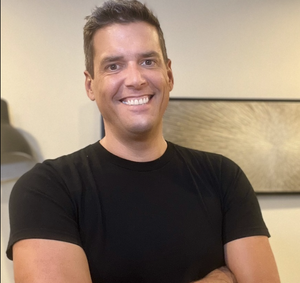
James Palmer is a Certified Mobile Massage Therapist based in Studio City, serving Los Angeles including Beverly Hills, Santa Monica, West Hollywood, Hollywood, Calabasas, and The Valley. CA Certification #73025.