How Massage Therapy Can Help with Lower Back Pain in Los Angeles
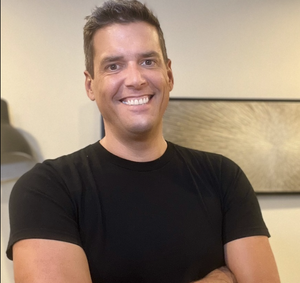
Lower back pain is, without question, the number one thing people reach out to me about. Not neck pain, not shoulder issues, the low back. And honestly, I get it. It's the complaint that sidelines people the most. It interrupts sleep, makes sitting at a desk miserable, and has a sneaky way of making every other part of life feel harder than it needs to be.
What I've learned after nearly a decade of working on bodies across Los Angeles is this: lower back pain is almost never just one thing. And more often than not, the spot that hurts is not the whole story.
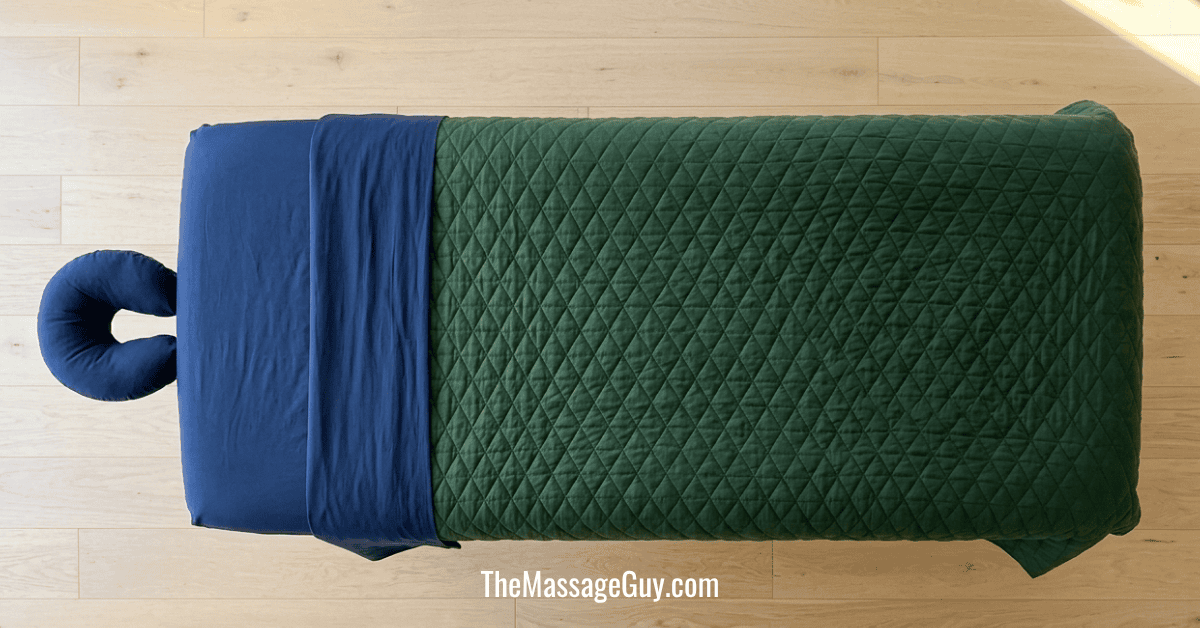
Book your session now to get on this table ASAP!
Where It's Actually Coming From
Let me tell you about two muscles that I think are underappreciated in the lower back pain conversation. Many clients say that “No one has ever worked on that before” or “I didn’t even know that muscle existed.”
The quadratus lumborum. Or the QL, as we call it. This is a deep muscle that runs from your lower ribs down to the top of your pelvis, and it does a lot of the behind-the-scenes work of keeping you upright. It often helps out a weak core in spine stabilization. But it’s primary reason for being is to help you hike your hip when your leg swings forward.
When it's overloaded, which happens constantly in a culture that involves a lot of sitting, driving, and one-sided movement, it can refer pain deep into the low back, down into the SI joint region, and sometimes even into the hip. People often describe it as a deep ache that doesn't quite go away, no matter how much they stretch. That's the QL. It doesn't respond to stretching the way people hope. It needs direct work.
The glute medius. This one gets misidentified constantly, and I want to spend a moment on it because it matters. The glute medius sits on the outer portion of your hip, but when it's loaded with trigger points, it refers pain along the back of the pelvis and low back, right in that beltline area. People come to me convinced they have a "low back problem" and after a few minutes I'm working on their glutes and they're saying, "Wait, why does that feel exactly like my back pain?" Because it is their back pain. The glute medius is just rarely looked at.
Glute medius is another stabilizer muscle. It helps your body stay upright and assists side to side motions. Most of the time, it is angry because it is weak and neglected. I often suggest clients speak with a trainer to find some ways to strengthen their glutes as a whole. Constant sitting has them turned OFF! So when they are asked to work, they get upset and start sending pain signals. Massage can release the tension and quiet the noise, but building some strength back into those muscles is what keeps it from coming back.
These two muscles alone account for a significant portion of what people call lower back pain. And neither one of them tends to show up dramatically on an MRI.
The Other Usual Suspects
Beyond the QL and glute medius, a full lower back session usually involves looking at:
The piriformis — another deep hip muscle that can mimic sciatic pain when it's tight (I wrote a whole post on sciatica that gets into this more here)
The psoas — a hip flexor that attaches directly to the lumbar spine and drags on it when shortened; sitting all day is its best friend and your worst enemy (I've written about this one too - check it out)
The thoracolumbar fascia — the thick connective tissue layer that spans the low back and is often a source of that "stuck" stiffness people feel in the morning. I know an AMAZING myofascial stretch that clients ask for!
The erector spinae group — the long muscles running along either side of the spine that brace and fatigue constantly in people who are on their feet all day or, conversely, sitting without adequate support
When I do an intake with a new client, I want to know: Where exactly is the pain? Is it one-sided or bilateral? Does it radiate anywhere? Down the leg, into the hip, up toward the ribs? Does it ease up once you're moving, or does movement make it worse? Morning pain or end-of-day pain?
Those answers shape everything about how I approach the session.
What the Research Says
The medical establishment has actually come around on this. A clinical practice guideline from the American College of Physicians recommends massage as one of the first-line noninvasive treatments for both acute and chronic low back pain, listed alongside exercise, acupuncture, and heat therapy.* That's not a fringe position. That's the mainstream medical community saying: try the hands-on stuff before you reach for the medication.
The research on trigger point massage specifically for myofascial pain in the low back also shows meaningful reductions in both pain intensity and disability.** The QL and glute medius are, not coincidentally, among the most common trigger point sites in low back pain presentations.
What a Session Actually Looks Like
Every session starts with a conversation. That's non-negotiable for me, especially with new clients. I need to understand your history: how long you've been dealing with this, what makes it better, what makes it worse, whether you've had any imaging done, whether there's anything structurally going on that I need to work around.
Then I get to work.
I draw on elements of deep tissue massage, myofascial release, and trigger point techniques depending on what I'm finding in the tissue. Some days the QL is the obvious driver. Some days the whole session shifts when I find the glute medius is the real culprit. I follow what the body is telling me rather than sticking to a predetermined protocol. That's the whole point of the intake, and honestly, it's the reason I think this approach gets results when other things haven't.
You don't need to diagnose yourself before reaching out. That's my job.
Why In-Home Massage Makes Sense for Low Back Pain
Here's something I genuinely believe: getting off a table and immediately driving home through LA traffic is not great for a body that just had significant work done on it. The nervous system needs time to settle. The tissue needs to integrate what just happened.
When I come to you, whether you're in Beverly Hills, Santa Monica, West Hollywood, Studio City, Encino, Sherman Oaks, Calabasas, or anywhere else in the greater Los Angeles area, you can just be done when we're done. That rest period is part of the treatment.
I bring everything with me: table, sheets, blanket, oil, music. All I need from you is about an 8x8 foot space and a little bit of time.
How Often Should I Come Over?
For chronic lower back pain that's been building for a while, I usually suggest starting with a few sessions close together, maybe once a week for the first few weeks, to really make a dent in the pattern. Once things start shifting, we can space out and focus on maintenance.
It's not a one-and-done situation. Bodies build patterns over months and years. Unwinding them takes some consistency. But most people feel a meaningful difference within the first couple of sessions, which makes it much easier to stay with it.
If you're dealing with recurring lower back pain in Los Angeles and you're ready to actually do something about it, let's set something up. We'll talk through what's going on, I'll assess the tissue, and we'll put together a plan that makes sense for your body.
References:
* Qaseem A, Wilt TJ, McLean RM, et al. Noninvasive Treatments for Acute, Subacute, and Chronic Low Back Pain: A Clinical Practice Guideline From the American College of Physicians. Annals of Internal Medicine. 2017;166(7):514–530. https://doi.org/10.7326/M16-2367
** Dach F, Ferreira KS. Treating myofascial pain with dry needling: a systematic review for the best evidence-based practices in low back pain. Arquivos de Neuro-Psiquiatria. 2023;81(12):1169–1178. https://doi.org/10.1055/s-0043-1777731