Every breath you take could be hurting you
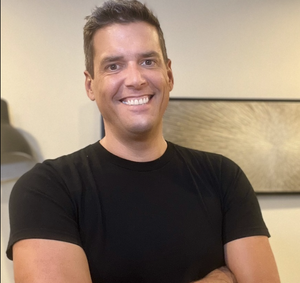
By James Palmer, CMT — The Massage Guy
Yes, you read that right! Do you have neck pain, or a tingling sensation running down your arm? The problem could be as simple as the way you're breathing. Breathing incorrectly can cause you pain — and chances are, you're breathing incorrectly right now. So let's check, shall we?
The Quick Self-Test
Lay on your back and fall into a comfortable, relaxed breathing pattern. Now place one hand on your belly button, and one just in the center of your rib cage. Gently take a few deeper breaths and take note of which hand you feel moving more than the other.
Are your hands moving evenly? Are you breathing from the rib cage or from your gut?
Most of us use our rib cage to fill our lungs with air, which leaves our core relaxed and inactive. And thus, it causes other muscles to pick up the slack.
When you use your rib cage to take each gasp of air, you engage your scalene muscles on the side of your neck with each and every breath. Tight scalene muscles not only lead to a sore neck, but they can also be the cause of your tension headaches. Furthermore, tingling down your arm can also be caused by tight scalene muscles, as they compress on your brachial plexus (the bundle of nerves that runs down your arm).*
Don't believe me? Test it out. Take a deep breath while pressing on the side of your neck. That tension you feel is your muscles doing the work someone else is supposed to be doing (hint: looking at you, diaphragm). The stiffness and soreness is their way of saying they're overworked.
Let's Fix This: Diaphragmatic Breathing 101
Let's focus on making your diaphragm do the work it was intended to do. Here's how:
Breathe in for 4 counts — Take a deep breath into your gut. Fill your belly with air. Concentrate on breathing deep into your core, not your chest.
Hold for 4 counts — Keep that air in your belly.
Exhale for 4 counts — Force the air out through your lips, engaging your core muscles to assist with the exhalation.
Sit empty for 4 counts — Then repeat these steps a few times.
Now sit up and practice the same series again. You may notice that you automatically have better posture. Your shoulders might relax and fall into place. Did your heart rate drop? Feel your neck muscles now. Are they still engaged or are they finally taking a vacation?
Why This Actually Matters (The Science Part)
Mastering your breath will not only help you with poor posture and muscle tension, but it can help you lower stress. Less stress equals a healthier, happier you.
Taking deep diaphragmatic breaths helps signal to the body that all is well in the world and we can enter rest and digest mode (the parasympathetic nervous system). Research shows that diaphragmatic breathing significantly reduces cortisol levels — your body's primary stress hormone — while increasing heart rate variability and parasympathetic activity.** Faster, shallow breathing signals the brain to enter fight or flight mode, which releases stress hormones like cortisol and adrenaline. Prolonged exposure to these hormones is not good for your health — it's linked to everything from high blood pressure to weakened immune function.
It's up to you, but luckily all you need to do is take a deep breath more often.
How This Connects to Massage Therapy
One of the things I focus on during deep tissue massage sessions — especially for clients in Beverly Hills, West Hollywood, and The Valley who spend all day at a desk — is releasing tension in the scalene muscles and upper traps. These are the exact muscles that get overworked when you're chest-breathing all day long.
Sports massage can also help reset your breathing patterns, particularly when we incorporate active stretching and range of motion work for the neck and shoulders. If your neck muscles are chronically tight from compensatory breathing, we can address that directly with targeted myofascial release techniques.
But here's the thing: I can release those muscles on the table, but if you go right back to chest-breathing 20,000 times a day, they're going to tighten right back up. Learning to breathe properly is one of the most powerful self-care tools you have — and it's completely free.
Practice This Throughout Your Day
You don't need to set aside an hour for breathwork (though if you want to dive deeper, there are some great resources out there). Just check in with yourself a few times a day:
When you're stuck in traffic on the 405 — Perfect time to practice 4-4-4-4 breathing
Before a stressful meeting or presentation — Two minutes of diaphragmatic breathing can calm your nervous system
When you're working at your desk — Set a reminder to check your breathing pattern every hour
Right before bed — This is a game-changer for sleep quality
If you're someone who deals with chronic neck pain, shoulder tension, or that nagging tingling down your arm, I'd love to help you address it hands-on. As a mobile massage therapist serving Los Angeles, I bring everything directly to your home in Santa Monica, Hollywood, Calabasas, Studio City, or wherever you are in the greater LA area.
Click here to book your session, and let's get those overworked muscles the relief they deserve.
References:
*Bordoni, B., & Varacallo, M. (2018). Anatomy, Head and Neck, Scalenus Muscle. In StatPearls. StatPearls Publishing.
**Hopper, S. I., Murray, S. L., Ferrara, L. R., & Singleton, J. K. (2019). Effectiveness of diaphragmatic breathing for reducing physiological and psychological stress in adults: a quantitative systematic review. JBI Database of Systematic Reviews and Implementation Reports, 17(9), 1855–1876.
James Palmer is a Certified Mobile Massage Therapist based in Studio City, serving Los Angeles including Beverly Hills, Santa Monica, West Hollywood, Hollywood, Calabasas, and The Valley. CA Certification #73025.